From Siloam Springs to Hollywood editing suites, JBU film graduates are telling stories that entertain, inform and resonate. Whether cutting Marvel action sequences, rigging stabilized cameras for blockbuster directors or shooting documentaries that inspire change, these alumni share a common thread: the hands-on experience, mentorship and community that began in JBU’s film program.
Learning by Doing
For Travis Olson ’17 (pictured top left), assistant editor and proud member of Hollywood’s Local 700 Editors Guild, that foundation began with a timeline and a classroom full of collaboration. Olson’s credits include award-winning shows across Hulu and Disney+.
At JBU, Olson appreciated that every student had the chance to explore every role on set, which is a luxury not always possible at larger film schools.
“There are a lot of student films being made and lots of opportunities for upperclassmen to begin learning specific crafts,” he said. “The most important thing that film school gives you is the connections and friendships with your peers. I would not be in Los Angeles right now without working with friends from JBU.”
For Olson, the fact that the film program has students take an editing class their first year was a fitting start for someone now shaping television episodes for Marvel Studios. “Editing is the most important part of cinema,” he said. “But I might be biased.”
Mentorship and Meaning
That personal, collaborative atmosphere is what Joseph Pelegreen ’15 remembers most vividly.
Today, he’s a director, producer and cinematographer whose résumé spans HBO, Netflix, NBC, Apple TV and Paramount. However, he credits Steve Snediker, professor of visual arts and film, with helping him find direction when his major was still undeclared.
“Sned made a point to welcome me into an intro to editing class,” Pelegreen said. “From that week on, I was hooked.”
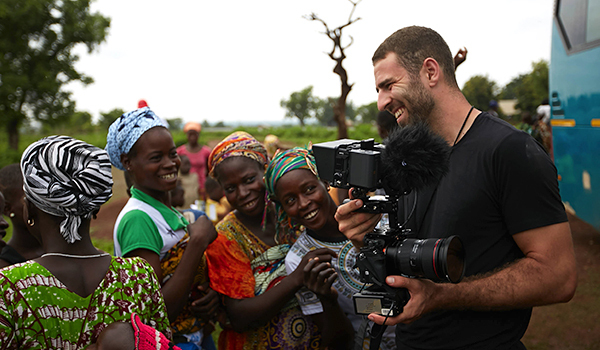
Through JBU’s senior thesis courses, Pelegreen learned how to schedule shoots, build budgets and manage postproduction workflows. All these skills translated directly into his first professional sets. His first documentary, “Mamakrom,” filmed in Ghana, explored education and ethical aid work and received four film festival awards. His current project, “Forgotten Songs,” examines the bond between endangered killer whales and the Coast Salish tribe, who call them family.
But beyond the craft, it was the mentorship and community that stuck.
“When you join JBU Film, you’re welcomed into a family,” Pelegreen said. “At JBU, I pestered Sned more times than I can count with incessant questions, requests for feedback, pitches for him to cameo in my projects and harassment in the form of pranks meant to give him the occasional anxiety spike. And he met every one of these moments with grace, thoughtfulness and a truly intentional desire for me to grow as an artist and individual.”
Pelegreen still connects with Snediker regularly and points to the program’s evolving mix of technical training and business insight as a reason it continues to thrive.
“The incorporation of hands-on courses with some of the latest gear available in an ever-changing environment, paired with business courses that help students understand not just how things are done but why, and to what specific end, unlocks deeper levels of growth once you step onto your first professional set,” he said.
A Career Built on Connection
For Karson Holbrook ’13, those early hands-on experiences and regional film community ties jump-started his career before he ever left Northwest Arkansas. Now a remote head technician with Chapman/Leonard, Holbrook provides stabilized camera gimbals for cranes, cars and cable rigs on major productions, including an award-winning HBO series, and productions streaming on Apple TV and Amazon.
“JBU gave me a foundation of film as a language,” he said. “Being able to work on senior projects gave me a start on sets. You get to learn how different departments work and what a day at work will look like after graduation.”
Holbrook said the local opportunities with the film communities in Northwest Arkansas and Little Rock were invaluable as he was able to work on three feature-length films before graduating.
Full Circle
Cinematographer Stephen Greathouse ’14, represented by Radiant Artists in Los Angeles, agrees that the JBU experience prepared him for his career in film. His credits span commercials for Procter & Gamble, Microsoft and Major League Soccer, as well as branded documentaries and narrative projects.
“JBU gave me the foundation to pursue cinematography as both a craft and a calling,” he said. “The access to cameras and editing tools encouraged experimentation, but the mentorship from professors like Mr. Snediker shaped how I think about storytelling and collaboration.”
That spirit of connection continues even on the West Coast.
“A recent shoot in LA brought things full circle,” Greathouse said. “I met up with fellow alumni Bryson Moore (’03, MBA ’06) and Holbrook after a pre-light at a local studio. We go back to our days working together through Bryson’s production company at JBU. Those early collaborations shaped not only our skills but the friendships that continue to this day.”
Moore formed his own production company Verge in 2014. Based in Tulsa and Northwest Arkansas, Verge’s projects range from national video campaigns for Fortune 500 companies (such as Walmart and Lowe’s) to projects for small businesses and nonprofits.
Stories that Matter
Across continents and careers, these alumni filmmakers share a common thread — a commitment to telling meaningful stories with integrity and craft. Whether in the editing suite, behind the camera or leading a production crew, JBU alumni are proof that a small program in Northwest Arkansas can have a significant impact on the big screen.
“At JBU, you’re not just learning how to make movies,” Pelegreen said. “You’re learning how to tell stories that matter, and you’re doing it with people who feel like family.”