When Parrish ’98 and Kelli Wessels ’98 set out on a backpacking trip through Thailand, Cambodia, Malaysia and Singapore in 2002, they were seeking adventure. What they found instead was something far darker — the world of human trafficking.
They also found a greater calling and life adventure than either of them could have imagined.
The young couple had just spent a year in Korea teaching English and decided to end their time with a two-month backpacking trip. While trekking across the lush landscapes of Southeast Asia, the Wesselses came face-to-face with human trafficking — the buying, selling and moving of human beings to be used for profit in a variety of illegal and exploitative industries.
“We saw young girls with older European men traveling together and commercial sex districts in big cities,” Kelli said. “We saw sex tourists who travel for the sole purpose of buying sex, and we saw women selling their bodies from around the world. It broke our hearts. We didn’t know the language and didn’t know what we could do to help, and the injustice was overwhelming.
I knew about human trafficking, but I hadn’t experienced it until that trip,” she said. “It was very in our face. ... Our hearts were awakened, and our spirits were saying, ‘How can we somehow be involved in this?’”
The Wesselses returned to the U.S. with more questions than answers. Kelli said they had always believed they would work overseas as “tent-making” missionaries, supporting themselves through business opportunities while sharing their faith. But those doors continued to remain closed.
So they prayed. And they waited.
Praying in Siloam Springs
Late in 2008, a guest speaker at their church, Outreach Center in Siloam Springs, mentioned a vague ministry opportunity in Thailand that involved combating human trafficking.
“Parrish and I had been praying for years,” Kelli said. “But when this speaker shared, we knew. Our spirits were saying, ‘It’s time.’”
What the Wesselses didn’t yet know was that God was simultaneously working in the lives of another couple in Siloam Springs, Joel and Amy Karum ’97. God was giving them the same message — it’s time to get to work in the fight against human trafficking.
God brought the Wessels and Karum families together with a shared vision, and they spent all of 2009 praying together, getting to know one another and establishing their ministry as a 501(c)(3) nonprofit in the U.S. They named the ministry Ezekiel Rain, inspired by Ezekiel 34:25-31, a vision and hope for those living in captivity.
On the Ground in Thailand
In February 2010, the Wessels and Karum families boarded a plane to Thailand to begin their work in Southeast Asia. Both families have been there ever since.
After getting established as an official Thai foundation in August 2012, Ezekiel Rain opened its first aftercare restoration home in Chang Rai, Thailand, that October.
“What we believed God was calling us to do was to see trafficking victims restored in the context of family and in the environment of prayer and worship,” Kelli said.
For the first decade of their work in Thailand, Ezekiel Rain worked exclusively for the restoration of sex trafficking survivors, first young male survivors and later including female survivors. Now, Ezekiel Rain has expanded its ministry to serve survivors of labor trafficking.
Thailand is both a destination and a transit country for trafficking, Kelli said, and Ezekiel Rain works with local trafficking survivors as well as survivors from other countries who have been trafficked through Thailand.
Now, the day-to-day work also includes projects aimed at prevention.
Kelli said one of the elements of their work that sets Ezekiel Rain apart from other anti-trafficking organizations is their focus on building and strengthening families. Kelli cites the breakdown of the family in Southeast Asia as a primary contributing factor to the region’s trafficking crisis.
Ezekiel Rain is working to strengthen families through several programs, including an intensive 18-month mentorship program in which marginalized or at-risk families learn about health, communication, finances, a vision for their families and sustainable ways to make a living.
“We really believe that God’s path to restoration is through the family,” Kelli said. “If you can care for both the survivor and their family and community with training in trauma-informed care principles, and their communities can support them, we see healing come to the survivor and to their community. And that is our heart. We know that ‘hurt begets hurt,’ but we’ve also learned that ‘healing begets healing.’ When survivors are healing within their families, very few need long-term removed care.”
Ezekiel Rain’s prevention programs also include youth camps, local school programs and mentorship programs aimed at helping young people understand their identity, value and individual strengths — concepts often lost to young people due to fatalistic Buddhist influences in the region.
What started with two American families has grown to include a field team of 14 Thai nationals (who speak the tribal languages and work in prevention and aftercare programs) and three foreign volunteers, including Kelli and Joel. The ministry is governed by a board of directors whose seven members are located throughout the U.S. and Thailand. Among those who have worked with Ezekiel Rain or served on the board are a number of JBU alumni — Julio Echegoyen ’94, Paul Eldridge ’88 and Heidi Meythaler ’05 — and former and current JBU employees like Scott Shaw, Kai Togami, Jade Choppala and Janie McReynolds.
In the 16 years since the Wesselses and the Karums founded Ezekiel Rain, many things have grown and changed, but one thing has remained constant: they continue to pray.
Pray without Ceasing
Prayer and worship have been core values at Ezekiel Rain since the beginning. The ministry hosts daily prayer and worship services for its staff, and it has an on-site dedicated prayer room. Each Thai staff member spends at least five hours in the prayer room every week. Kelli said that even to the Thai locals, Ezekiel Rain is known as an organization that prays. Government workers will call the Ezekiel Rain office and say, “We have this big case. Will you pray?”
“We understand that at its core, human trafficking is a spiritual issue,” Kelli said. “Prayer and worship are nonnegotiable. If we were told we could no longer do that, we would literally close our doors. We could not do this work without intimacy with God.”
The Ezekiel Rain staff calls these rhythms of prayer and worship the “Upward/Outward.”
“We look up to God. We look to his justice. We look to his strength. We look to his promises,” Kelli said. “And then we move out and serve and love and advocate and help, based on that. These rhythms are what have sustained us.”
Missionaries in Residence
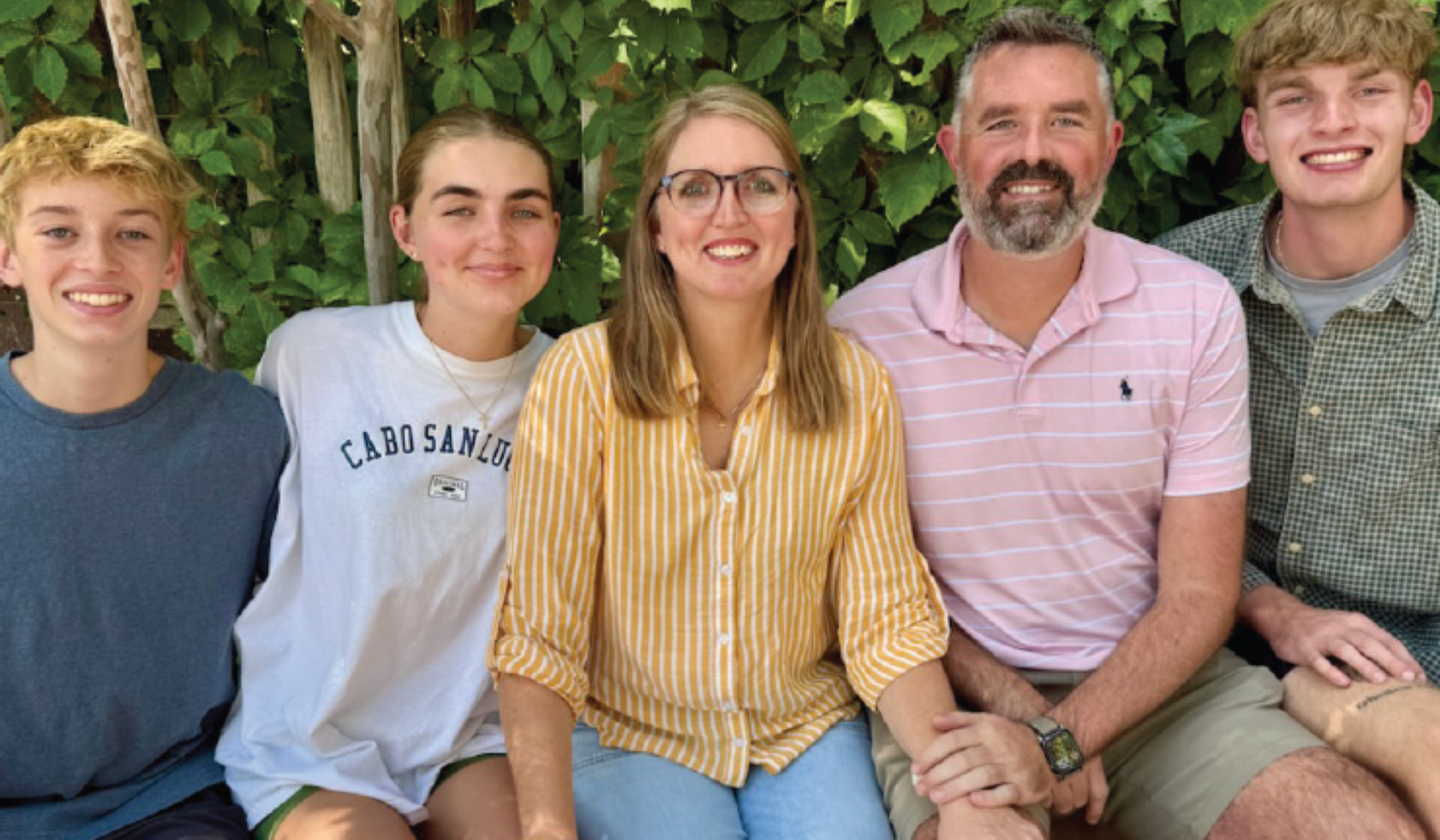
While continuing their work with Ezekiel Rain, Parrish and Kelli have taken on a new task for this year — serving as the JBU Missionaries in Residence. Started in 1992, the MIR program brings in a missionary couple each year to support JBU students who are missionary kids. Two of the Wesselses’ children are JBU students — junior Nash is studying biology/pre-med, and freshman Nora is studying humanitarian and disaster relief, as well as intercultural studies. Their youngest son, Abe, is a freshman in high school.
As they serve as MIRs, the Wesselses are continuing their work in the fight against human trafficking. Missionary kids from all over the world are speaking with the Wesselses about what it means to fight injustice in a broken world.
“It’s a gift to be here with the nations,” Kelli said. “Several of the international students and MKs have come to us and told us they feel called to justice work. They are being sent out. It’s a privilege to walk with them through part of that journey, and I’m grateful.”
Still Praying
The Wesselses pray for the JBU students as they are being launched into the next phases of their lives. They pray for Thai and foreign workers that God is bringing to work with Ezekiel Rain. They pray for the restoration of the survivors in their care.
As they pray and work, they are watching God fulfill their Ezekiel 34:25-31 vision for trafficking survivors:
“I will make them and the places all around my hill a blessing, and I will send down the showers in their season; they shall be showers of blessing. … And they shall know that I am the LORD, when I break the bars of their yoke, and deliver them from the hand of those who enslaved them … They shall dwell securely, and none shall make them afraid.” (Ezekiel 34: 25-28, ESV)